
The Million-Dollar Mistake of Cable Tie Selection
What happens when a critical system fails because of a forgotten detail as small as a cable tie? Picture this: a bustling factory floor suddenly goes silent, machinery stalls, and schedules are derailed, all because a simple tie could not handle the pressure.
Overlooked choices like material, environment, and application can turn minor components into major liabilities. Are you confident that every time you wrap in your operation suits its duty, handling heat, resisting chemicals, and surviving harsh outdoor conditions?
This guide delves into expert strategies and industry secrets that elevate your installations. Master the delicate balance of strength, durability, and function to keep your equipment running, protect your investment, and maintain safety at every turn.
Discover how thoughtful Cable Tie Selection safeguards your systems where it matters most. The Hidden Saboteur: Why the Wrong Fastener Costs a Fortune

Escaping the Zip Tie Trap: Alternatives and When to Commit
Selecting the right fastening solution means knowing the different types of ties and their applications. While zip ties (also called tie wraps, cable ties, or natural ties) are widely recognized as an essential tool, some needs call for other materials or formats.
The Cost-Feature Analysis
Alternative | Key Feature & How It Works | Cost/Rate (Relative) | When to Use (The Trade-off) |
Hook-and-Loop | Releasable, non-toxic loops ideal for delicate wires or where frequent changes are needed | Moderate upfront, Low long-term | Ideal in IT or panel environments requiring adjustable, gentle, or reusable fastening |
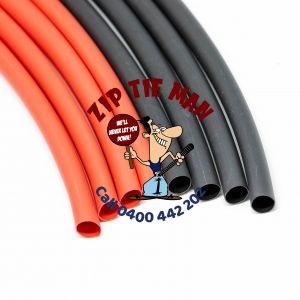
Spiral Wrap/Sleeving | Provides abrasion protection for wire bundles and allows retrofitting | High | Used for wiring subject to vibration, friction, or where adjustment to bundle diameters is expected |
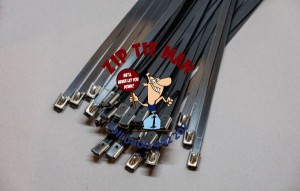
Metal Banding/Strapping | Stainless steel cable tiesor bands offer high strength and prevent corrosion.. | Highest (Specialized tools required) | Chosen for harsh conditions, outdoor applications, marine, or industrial environments demanding longevity |
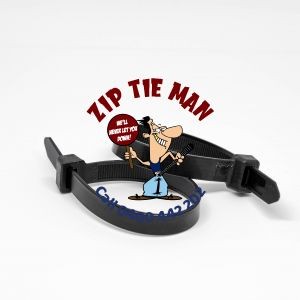
Despite these options, standard cable ties—including heavy-duty cable ties, releasable cable ties, and specialized lengths or widths—remain optimal for permanent, high-tensile strength, and secure wire bundling. They excel at supporting bundles in both indoor and outdoor scenarios, provided their material and design fit the job.
The 8 Forbidden Secrets to Bulletproof Cable Tie Selection
Unlocking high strength and reliability starts with these lesser-known strategies:
The 'Hydration' Trap
Most nylon cable ties are hygroscopic, so storing them in sealed bags with moderate humidity is essential for maintaining their flexibility. Dry ties snap easily during installation, especially in temperature extremes.
The Rule of Halves
UV exposure and high temperatures degrade all tie wraps and cable ties over time, halving published tensile strengths. Always specify ties that exceed your maximum load by at least double, especially in outdoor applications.
The 'Softener Steal'
For wire bundles with soft PVC jackets, choose specialty ties, like Teflon or metal detectable cable ties, to prevent embrittlement and ensure long bundle life in the presence of plasticizers or for compliance in food processing, where metal detectors are used.
The Double-Lock Illusion

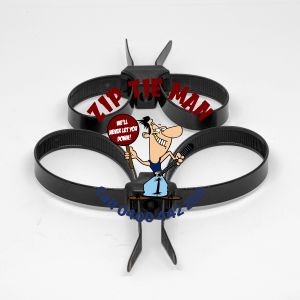
Standard ties can loosen under vibration or lateral movement. For heavy-duty or high-vibration uses, select twin-locking head cable ties. Their lock feature prevents accidental bundle slips in the most extreme conditions.
The Carbon Black Compliance
For any outdoor or UV-exposed job, only accept cable ties with 2%+ carbon black—true UV stability, not just a black color, is necessary for resistance to ultraviolet light and weathering.
The Over-Tightening Lie
Installation with tensioning tools protects insulation and prevents overtightening. This maintains the rounded edges and supports long-term reliability in wire, panel, and cable applications.
Colour as an Expiration Date
Use colour coding: various colours help implement maintenance schedules, identify various applications, or designate inspection intervals (e.g., red for scheduled replacement). Proper colour strategies also help reduce waste and increase safety.
The Acetyl Advantage
For applications needing durability under high flex or frequent movement, Acetalor POM ties outperform standard nylon for longevity and durability. This is especially suited for robotics, gates, and sectors like the construction industry.
The Data Matrix: Matching Environment to Material
Strategic cable tie selection means pairing the right material and tie wrap to the environment, ensuring your ties withstand even the harshest environments:
Environment/Condition | Material Type | Key Feature/Requirement | Max Temp | Why It Is Important |
Indoor/General | Standard nylon cable ties | Cost-effective, good tensile strength | 85°C (185°F) | Routine wiring in panels or enclosure bundles |
Direct Sunlight/Outdoor | UV-stabilized nylon or natural ties | 2%+ carbon black, UV protection | 85°C (185°F) | Avoids embrittlement, suitable for outdoor construction or signage |
High Temperatures/Engine Bay | Heat-stabilized nylon or stainless steel cable ties | Handles high temperatures, oxidation resistance | 120°C-538°C | Withstand extreme conditions in vehicles, machinery, or marine environments |
Marine/Salt Water | Stainless steel cable ties | Corrosion-resistant, high chemical resistance | 538°C (1000°F) | Non-negotiable for marine, offshore, and harsh chemical environments |
Chemical Processing | Teflon, ETFE, or metal detectable cable ties | Inert, withstands solvents; detected by metal detectors | 150°C (302°F) | Food processing, pharma, and environments requiring auditability |
Strategic Implementation: Benefits and Requirements
Choosing the right cable tie and following best practices delivers:
Downtime Minimization: Robust ties prevent failure and maintain power.
Regulatory Adherence: Meet UL, NFPA, and HACCP requirements in the construction, industrial, and food sectors.
Extended Service Life: High-quality cable ties reduce maintenance and support system longevity.
Optimized Assembly: Consistent results with the right tie for every bundle diameter and application.
Vibration Mitigation: Secure wire, bundles, and cables against lateral movement.
Safety: Smooth, flush-cut installation prevents injuries from sharp or broken ties.
Critical Bundle Checklist

Before securing wires or cables, ensure:
Tensile strength margin supports twice the maximum load required.
The selected widths, lengths, and materials suit your bundle and application.
You selected the best tie wrap, whether for indoor applications, outdoor tasks, or harsh conditions.
Fire safety standards and chemical compatibility are met for every installation.
These requirements are essential everywhere heavy-duty cable ties, metal detectable cable ties, or releasable cable ties are used, such as in food, marine, or data center wiring.
Conclusion: Making the Conscious Choice
Cable Tie Selection is much more than picking a simple zip tie or strap; it means specifying an essential component that guarantees safety, durability, and reliability for every job in construction, wiring, or demanding environments.
Take charge: use these eight secrets to audit your current ties, strengthen your site's defenses, and eliminate future risks. Ready to transform your cable management approach with Zip Tie Man? Apply these strategies today or explore our expert resources for next-level solutions.
Frequently Asked Questions
What factors should I consider when selecting cable ties?
Focus on the application environment, material compatibility, tensile strength, and specific requirements like UV resistance or chemical resistance. These factors ensure durability and reliability.
What are the best cable ties for outdoor applications?
UV-stabilized nylon cable ties with at least 2% carbon black are ideal for outdoor use. They resist ultraviolet light and prevent embrittlement.
How do I prevent over-tightening cable ties?
Use a calibrated tensioning tool to apply consistent tension. This prevents damage to wires and ensures secure bundling without compromising insulation.
What are metal detectable cable ties used for?
These ties are designed for industries like food processing, where metal detectors can identify them if they break, ensuring safety and compliance.
Why is tensile strength important in cable tie selection?
Tensile strength determines the load a tie can handle. Always choose ties with a strength margin of at least 2x the expected load for safety and longevity.