

Stainless Steel Zip Ties
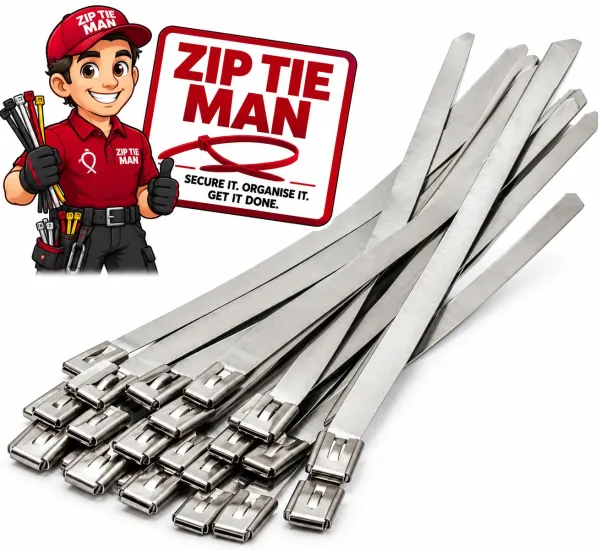
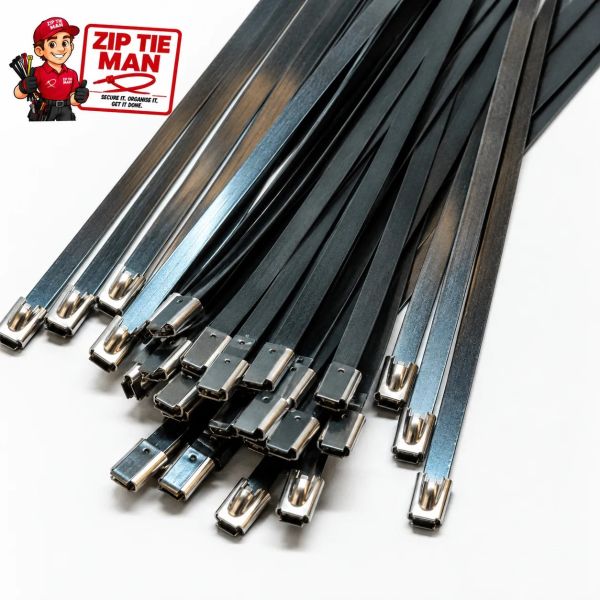
Stainless steel zip ties are for jobs where nylon will not last: high heat near exhausts and engines, salt air on the coast, chemicals, or years of direct sun. They have a self-locking ball head and come in two grades, 304 and 316, plus a nylon coated 304.
Which grade?
| Grade | Best for | Sizes |
|---|---|---|
| 304 stainless | General outdoor and industrial work, heat, sun and most chemicals | 4.6mm x 200, 300, 350, 500mm; 7.8mm x 250, 350, 500mm |
| 316 stainless (marine grade) | Coastal, marine and offshore jobs where salt and corrosion are the main risk | 4.6mm x 200, 300, 350, 500mm; 7.8mm x 250, 350, 500mm |
| Nylon coated 304 | Where bare metal could scratch a surface or rub through wire insulation | 4.6mm x 200, 250, 300mm |
Packs
304 and 316 ties come in packs of 10 or 100, so you can buy a few for one job or stock up. Nylon coated ties come in packs of 100.
Fitting stainless ties
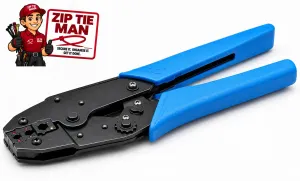
Stainless ties are hard to tension evenly by hand, and a cut end is sharp. A stainless steel zip tie gun (for 3mm to 7.9mm ties) pulls them tight and cuts them flush in one action.
Common questions
Are metal zip ties stronger than plastic?
Stainless ties handle heat, UV and corrosion far better than nylon, which is why they are used where a nylon tie would go brittle or soften. For a straight strength comparison, check the rating for the specific size.
Do metal zip ties need a tool?
You can fit them by hand, but a stainless tie gun gives proper tension and a flush, safe cut.
304 or 316?
304 suits most outdoor and industrial jobs. Choose 316 for the coast, boats and anywhere salt spray or chemicals are present.
For general outdoor jobs that do not need metal, UV stabilised black zip ties cost less.