

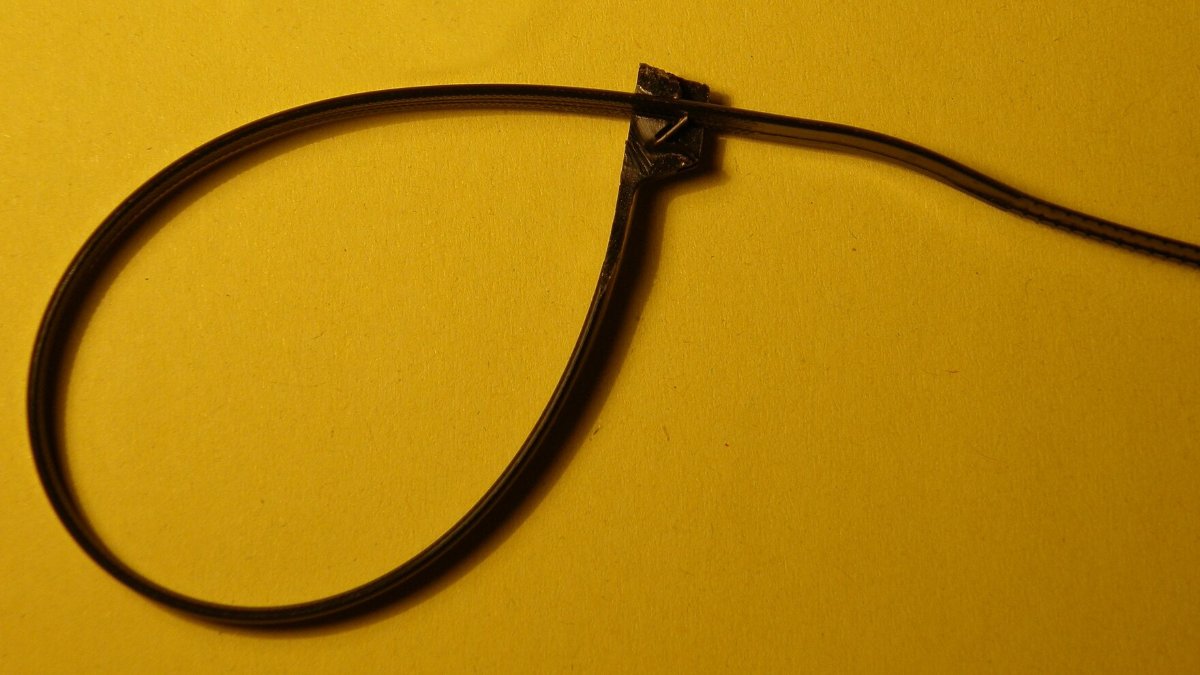
How to use zip ties properly comes down to three things: the strap goes in the right way round, it is pulled snug but not crushing, and the tail is cut flush. Get those right and a tie holds for years. Get them wrong and it slips, snaps, or leaves a sharp end that cuts hands.
This guide walks through each step, then covers the mistakes we see most often.
Which way does a zip tie go?
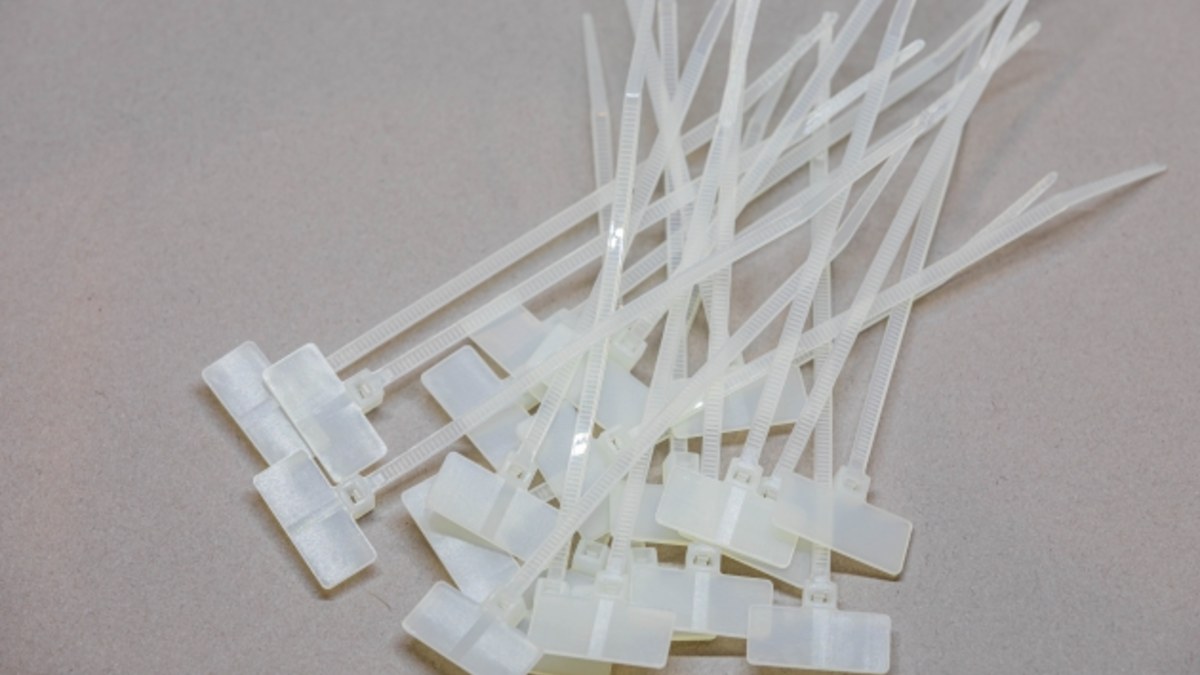
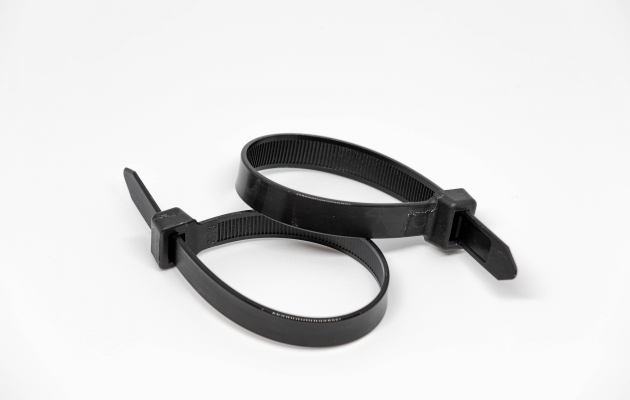
A nylon zip tie has a smooth side and a ridged side. The ridges are the teeth the lock grips.
- Ridged side in: wrap the tie around the bundle with the ridges facing the bundle.
- Tail into the head: push the pointed tail through the slot in the head.
- Listen for the click: as you pull, you should hear and feel a ratchet. If the tail slides straight through without clicking, the strap is upside down. Pull it out, flip it over and try again.
How to use a zip tie, step by step
- Pick the right size. The width sets the strength (8kg at 2.5mm up to 80kg at 9mm) and the length must go round the bundle with a tail to spare. Our zip tie sizes guide shows how to measure.
- Wrap the bundle. Loop the tie around, ridged side in.
- Thread the tail. Push the tail through the head until it clicks.
- Pull snug by hand. Hold the head against the bundle with one hand and pull the tail with the other.
- Check the tension. The bundle should not slide inside the tie, but cables and hoses should not be squashed or kinked.
- Turn the head to the side. Rotate the tie so the head sits where it will not catch hands, clothing or other leads.
- Cut the tail flush. Use sharp flush cutters right against the head, or a zip tie gun that tensions and cuts in one action. See how to cut zip ties flush.
How tight should a zip tie be?
Snug, not crushing. The right tension depends on what you are holding:
| Holding | Tension |
|---|---|
| Data, audio and speaker leads | Light: the bundle holds shape but leads can still slide a little |
| Power leads and looms | Firm: no movement, insulation not dented |
| Hose | Firm, with a wider strap so it does not bite in |
| Mesh, shade cloth, fencing | Firm: pulled tight against the post or wire |
| Plants and growing stems | Loose: leave room to grow, or use a releasable tie |
On long runs, a zip tie gun gives every tie the same tension, which is hard to match by hand.
How far apart should zip ties be?
For a tidy wiring loom, a tie every 150mm to 300mm works well. Closer spacing keeps a floppy bundle straight; wider spacing is fine for stiff cable or conduit. On anything that vibrates, such as a vehicle loom, err on the closer side.
Mistakes that make zip ties fail
- Strap upside down. It slides through without locking. Flip it.
- Too short. If the tail only just reaches the head, you cannot pull it tight. Go one length up.
- Too thin for the load. A 2.5mm tie at 8kg will snap on a heavy bundle. Go wider.
- Cut with side cutters at an angle. This leaves a sharp point. Cut flush and square to the head.
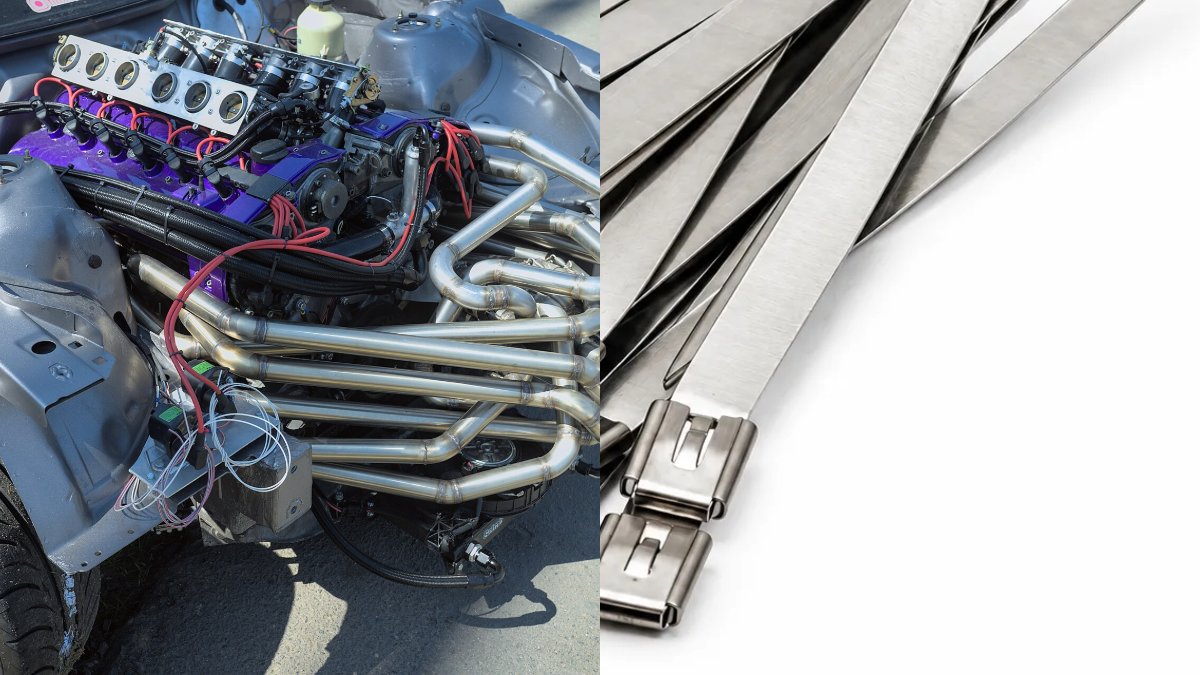
- Plastic near heat. Nylon softens near exhausts and engines. Use stainless steel zip ties there.
- Over a sharp edge. A burr on steel can cut a nylon strap. Pad the edge or use a wider tie.
Common questions
Which side of a zip tie goes inside?
The ridged side faces the bundle. The smooth side faces out.
Can you reuse a zip tie?
A standard zip tie is made to lock once. You can sometimes release one with care; see how to undo a zip tie. For jobs you will reopen, use releasable zip ties.
Do I need a tool to use zip ties?
No. Fingers and sharp flush cutters are enough for nylon ties. A zip tie gun helps on long runs, and it is the usual way to tension and cut stainless ties.
Written by the team at Zip Tie Man, an Australian zip tie supplier since 2016.
Shop zip ties in every size, or read what a zip tie is and how it works.
Featured image: StromBer, CC BY 3.0, via Wikimedia Commons (cropped).