

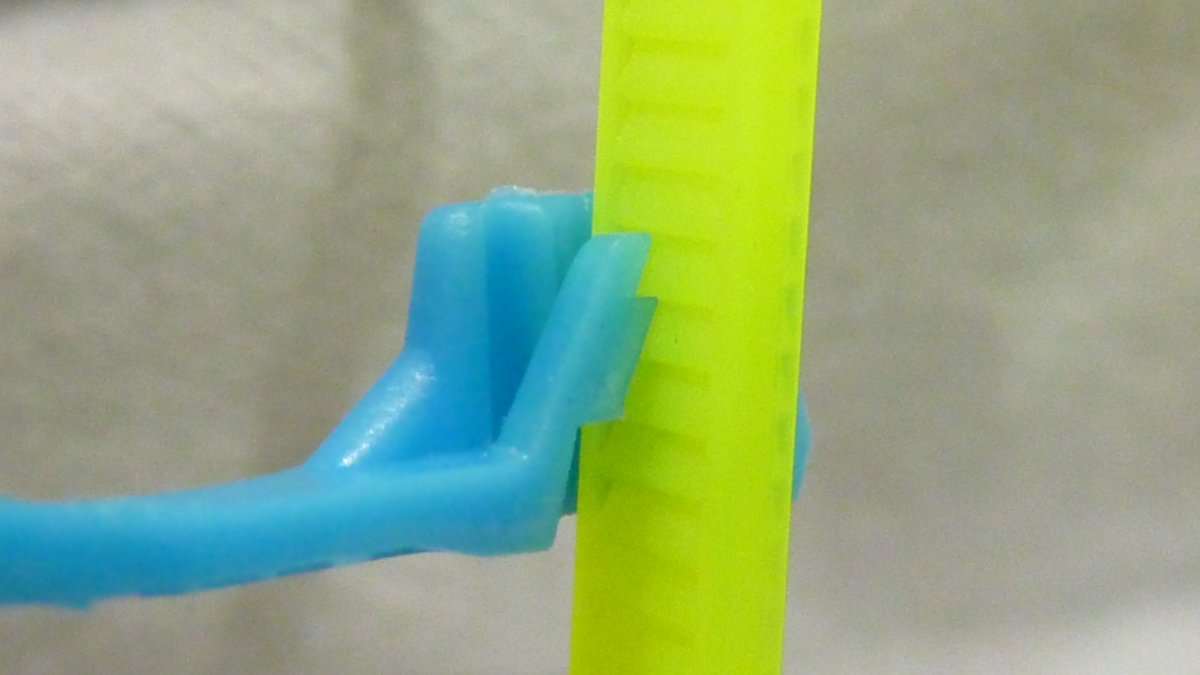
What is a zip tie? It is a one-piece fastener: a ridged strap with a small locking head at one end. Feed the tail through the head, pull it tight, and it locks. It will not slide back, so the bundle stays held until you cut the tie or, with a releasable tie, press the release tab.
That simple design is why zip ties end up everywhere, from a loom of wires under a ute's dash to a shade cloth on a fence. This guide explains how the lock works, the main types, and how to tell which one a job needs.
What a zip tie is made of
Most zip ties are moulded from nylon 66, a tough plastic that flexes without cracking. Ours come in three finishes:
- Black: UV stabilised nylon 66, made to hold up in Australian sun.
- White: nylon 66, for switchboards and light-coloured cabling.
- Colours: the same nylon 66 in 11 colours, for coding runs and jobs.
All three carry a UL94 V2 flammability rating. Our guide to what zip ties are made of explains the materials and ratings in more detail.
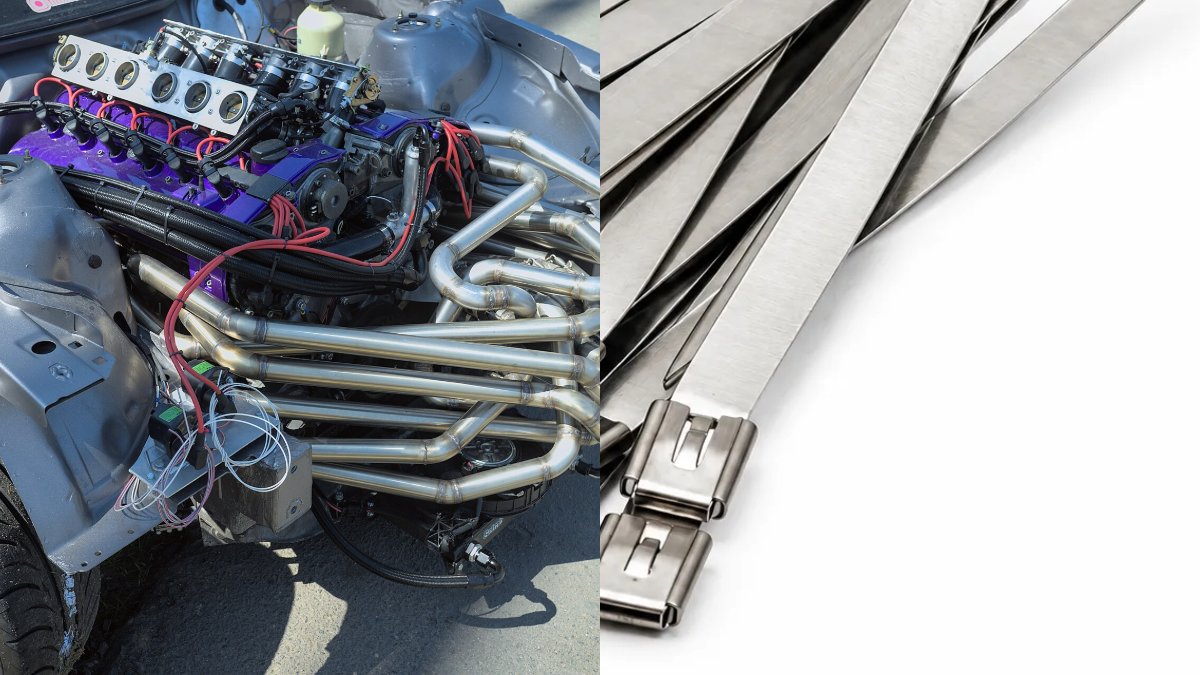
Where nylon is not tough enough, there are metal zip ties in 304 and 316 stainless steel. Our stainless ties are listed with a temperature rating of approximately 538°C, far beyond what any plastic tie can take.
How a zip tie locks
Look closely at a nylon zip tie and you will see two parts doing the work:
- The teeth. One side of the strap is covered in small angled ridges.
- The pawl. Inside the head is a small flexible tongue. As you pull the strap through, the pawl rides up and over each tooth.
- The lock. Pull back the other way and the pawl digs into the nearest tooth. The harder the bundle pushes, the harder the pawl bites.
That is why a zip tie only tightens in one direction, and why it clicks as you pull it. Stainless ties work differently: a small ball inside the head rolls into place and wedges the strap.
Types of zip tie
Every zip tie uses the same basic idea, but the head, the strap and the fixing change with the job. These are the types we stock.
| Type | Width | Breaking strain | Best for |
|---|---|---|---|
| Standard black | 2.5mm to 12.7mm | 8kg to 80kg (12.7mm: see pack) | Outdoor jobs and anything in the sun |
| Standard white | 2.5mm to 9mm | 8kg to 80kg | Switchboards, racks and light-coloured cabling |
| Coloured | 2.5mm, 4.8mm, 7.6mm | 8kg, 22kg, 55kg | Coding circuits, zones, clients or stock |
| Releasable (reusable) | 7.6mm | 55kg | Bundles you need to open and close again |
| Mountable | 4.8mm | 22kg | Screwing a run to a wall or frame |
| Push mount | 3.6mm to 8mm | See pack | Clipping into a hole in a car panel |
| Double head | 4.8mm | 22kg | Two bundles side by side |
| Dual handcuff | 12.7mm | See pack | Keeping two hoses apart |
| Button head (chassis) | 7.6mm | 55kg | Fixing to a chassis rail |
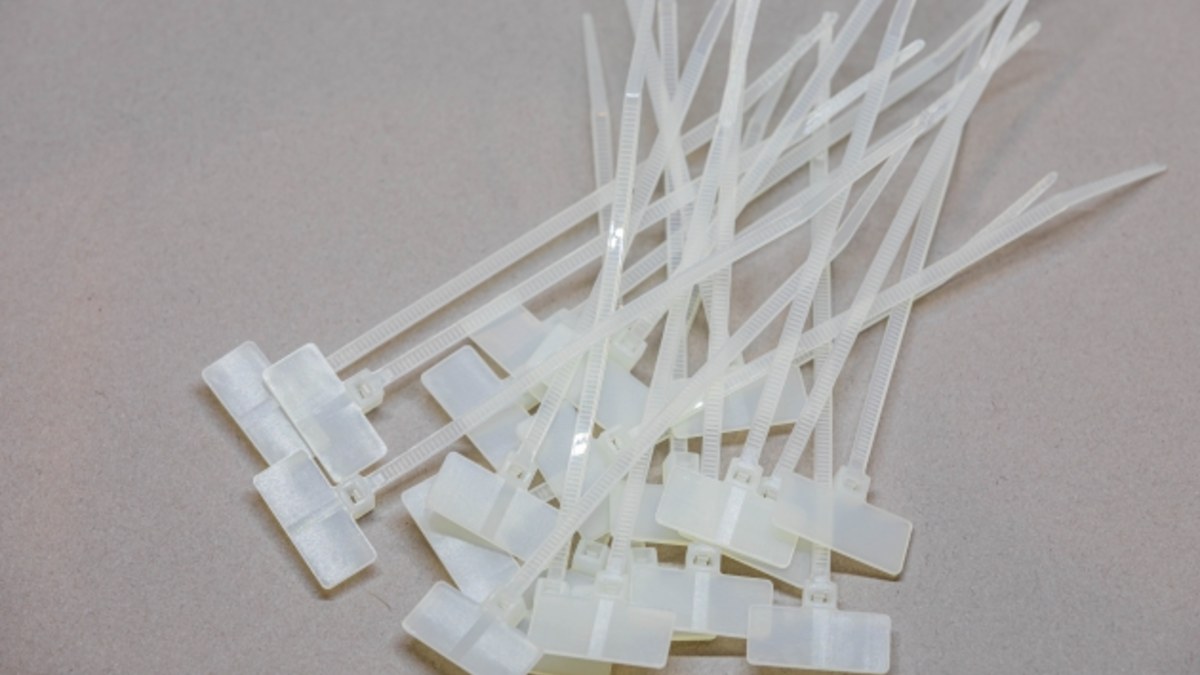
| Markers | 2.5mm, 4.8mm | 8kg, 22kg | Labelling a lead or bundle |
| Stainless steel | 4.6mm, 7.8mm | See pack | Heat, salt air and chemicals |
"See pack" means the strength is printed on the pack.
Nylon or stainless steel?
For most jobs, nylon is the right answer. It is cheap, easy to cut, and black nylon is UV stabilised for outdoor work. Step up to stainless when the tie will sit near an exhaust or engine, in salt spray on the coast, or anywhere a plastic tie would soften, go brittle or burn. Inland, 304 does the job; near the sea, choose 316 marine grade. We compare the two in detail in metal vs plastic zip ties.
How strong is a zip tie?
The width sets the strength. These are the breaking strains for our nylon ties:
| Width | Breaking strain | Typical use |
|---|---|---|
| 2.5mm | 8kg | Single leads, small looms, labels |
| 3.6mm | 18kg | Light looms and household jobs |
| 4.8mm | 22kg | The all-round width |
| 7.6mm | 55kg | Heavy bundles, steel offcuts, fencing |
| 9mm | 80kg | Oversized bundles, hose and pipe |
Breaking strain is the load at which a tie snaps, not a safe working load. Leave a margin, and use two ties or a wider one when a load moves or vibrates.
Where zip ties are used
Almost every trade and household finds a use for them. The most common jobs:
- Electrical and data: bundling leads in switchboards, racks and behind desks, and labelling runs with zip tie markers. See cable and cord management with zip ties.
- Cars, trailers and 4WDs: wiring looms, hoses, undertrays and temporary trim fixes. Push mount and button head ties clip into panels and chassis rails. See zip ties for car repairs.
- Garden and farm: fence mesh, shade cloth, trellis and irrigation lines. See zip ties in the garden.
- Workshop and site: steel offcuts, signs, hose and pipe bundles, where 7.6mm and 9mm ties earn their keep.
- Home and travel: storage, Christmas lights, camping gear and luggage.
When a zip tie is the wrong choice
A zip tie is a holding fastener, not a lifting or sealing one. Use something else when:
- A hose is under pressure. A zip tie cannot clamp evenly around a hose; use a German 304 hose clamp, or an EFI clamp on fuel injection lines.
- Something is being lifted or carries people. Use rated rigging, not ties.
- It sits against an exhaust or hot engine part. Nylon softens; use stainless steel.
- A join has to stay waterproof. Seal it with dual wall heat shrink, then tie the run.
We compare the options in zip ties vs tape, twist ties and hose clamps.
Choosing the width and length
Pick the width for the load and the length for the bundle. A tie needs to go right around the bundle with enough tail left over to grip and pull tight. Our zip tie sizes guide has a full chart of widths, lengths and inch equivalents, so you can match a tie to the job before you buy.
Common questions
What is a zip tie used for?
Holding things together or in place: bundling wires and hoses, fixing mesh and shade cloth to a fence, securing a loom to a frame, tagging gear and countless quick fixes. Our zip tie uses and hacks guide has more ideas.
What else are zip ties called?
Zip ties are also called tie wraps, ziptie or zipties (one word), and locking ties. They all describe the same one-way locking strap.
Are zip ties reusable?
A standard zip tie is made to lock once, then be cut off. Releasable zip ties have a tab on the head that opens the lock, so you can adjust the bundle and close it again. You can also undo a standard zip tie with care.
Which way does a zip tie go?
Bend the tie into a loop with the ridged side facing inward, toward the bundle, then push the tail into the head. You should hear it click as you pull. If it slides straight through without clicking, the strap is upside down: turn it over and try again. Our guide on how to use a zip tie walks through it step by step.
How do I cut a zip tie without leaving a sharp edge?
Cut flush against the head with sharp flush cutters, or use a zip tie gun that tensions and cuts in one action.
Written by the team at Zip Tie Man, an Australian zip tie supplier since 2016. Sizes, strengths and ratings in this guide are taken from our own product listings.
Ready to stock up? Browse nylon zip ties in every size, or start with our bundles for a mix of popular sizes.
Featured image: Mushrooshi, public domain, via Wikimedia Commons.