

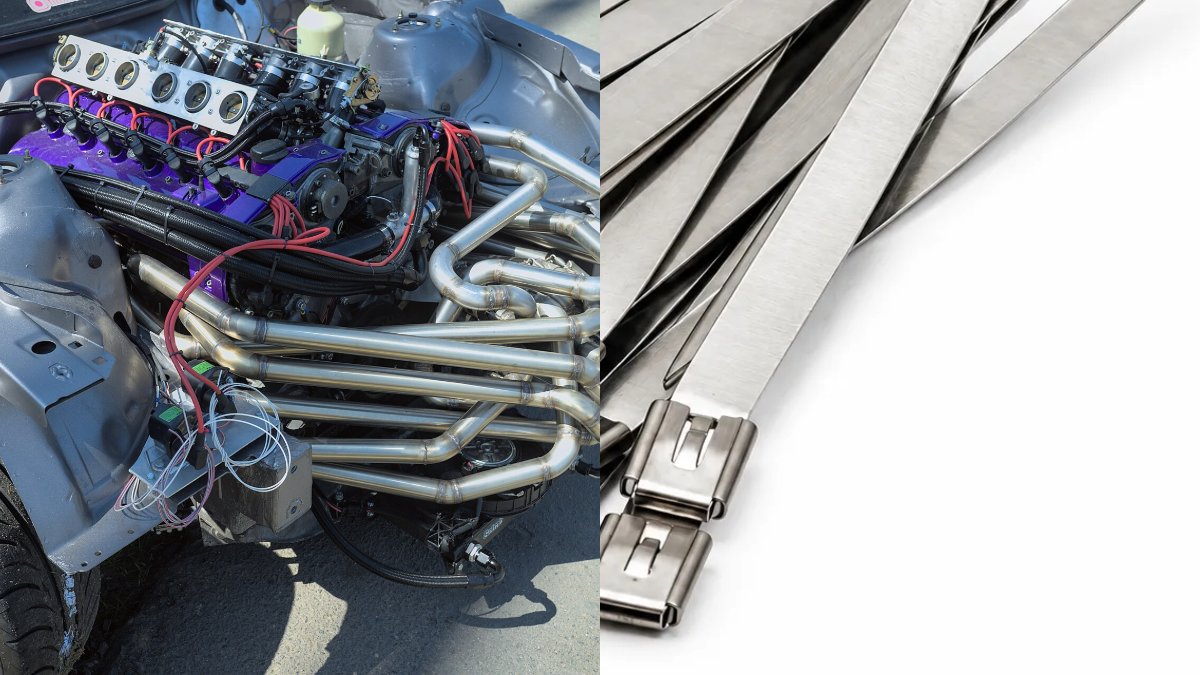
Do zip ties melt? Yes. A nylon zip tie melts at around 260°C, but the temperature that matters is far lower: standard nylon 66 zip ties are typically rated for continuous use from -40°C to 85°C. Above that a tie softens and ages faster, so near an exhaust or engine you need a stainless steel zip tie.
The figures below are typical published ratings for these materials. They are a guide, not test results for one product, so leave a margin on any job where failure matters.
Zip tie temperature ratings at a glance
| Zip tie type | Typical rating | Good for |
|---|---|---|
| Standard nylon 66 | -40°C to 85°C continuous | Indoor work, wiring, general outdoor jobs |
| Heat-stabilised nylon 66 | Up to about 105°C to 120°C, depending on the maker | Warm enclosures and engine bays away from hot parts |
| Nylon or polyester coated stainless | Around 150°C, depending on the coating | Hot jobs where bare metal could chafe |
| Bare 304 or 316 stainless steel | 300°C to about 538°C, depending on the maker | Exhausts, engines, heat shields |
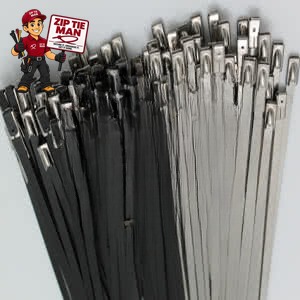
Our stainless steel zip ties are listed with a rating of approximately 538°C. The rating for each product is printed on its pack, so check the pack. The nylon figures above are typical for the material.
Do zip ties melt?
Nylon 66 melts at a high temperature for a plastic. In one laboratory study of nylon ties, a sample melted at about 262°C, within the 225°C to 265°C range given for the material.
A zip tie fails well before it melts, though. Near its limit the strap softens and stretches, the grip of the lock fades, and long spells of heat leave the nylon brittle. That is why the working rating is so much lower than the melting point.
How hot can a zip tie get?
For a standard nylon zip tie, plan on 85°C as the most it should see for long periods. Some guides allow short spells at higher temperatures, but do not design a job around that.
- In the sun: a black zip tie on a dark surface can get much hotter than the air. Check the job if the surface is too hot to touch.
- In a roof space or ute tray: hot, but usually within range for a nylon tie.
- In an engine bay: keep nylon well away from the exhaust, turbo and manifold.
- On a hot water pipe: check the pipe temperature first. If in doubt, use stainless.
What cold does to a zip tie
Nylon stiffens as it gets colder. Standard ties are typically rated down to -40°C, which covers Australian conditions, but a cold tie is easier to snap, so fit ties gently in frosty weather.
Moisture matters too. Nylon holds a small amount of water from the air, which keeps it flexible, and the same laboratory study names moisture loss as one cause of ties breaking. Very old or very dry ties can crack when you pull them, so keep spare zip ties in their bag, out of the sun.
Are zip ties fire resistant?
Our nylon zip ties carry a UL94 V2 rating. That means a test strip stops burning on its own soon after the flame is removed, though it may drip burning particles. It does not make a nylon tie fireproof: it will still burn in a fire. Where a non-combustible fixing is specified, use a stainless steel zip tie. Our guide to what zip ties are made of explains the rating in more detail.
Which zip tie to use near heat
- Warm but not hot: a black nylon zip tie is fine.
- Near an exhaust, engine or heater: 304 stainless steel zip ties.
- Hot and on the coast: 316 marine grade.
- Metal could rub through a lead: nylon coated 304 ties, but check the coating's lower heat limit.
Not sure which way to go? Compare them in metal vs plastic zip ties, and for vehicles see zip ties for car repairs.
Common questions
Are zip ties heat resistant?
Standard nylon zip ties handle everyday heat, up to about 85°C continuously. For real heat, use a stainless steel zip tie.
Can a zip tie melt in a car engine bay?
Yes, against an exhaust or turbo a nylon tie will soften and can melt. Elsewhere in the bay it may survive, but it will age faster. Use stainless near hot parts.
Will zip ties melt in the sun?
No. Sunlight will not melt a nylon zip tie. UV is the bigger risk over time; see how long zip ties last outdoors.
Written by the team at Zip Tie Man, an Australian zip tie supplier since 2016. Temperature figures are typical published ratings for each material, not test results for a specific product.
Shop stainless steel zip ties, or read what a zip tie is and how it works.
Featured image (exhaust): Lewis Collard, CC0, via Wikimedia Commons (cropped).