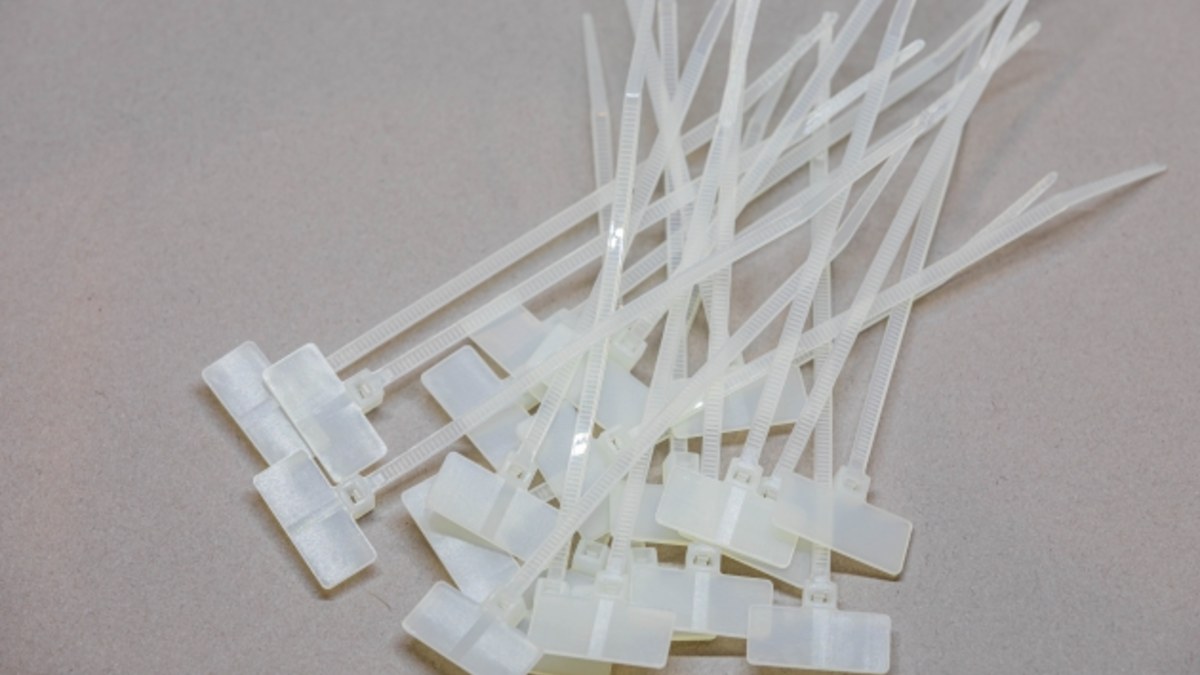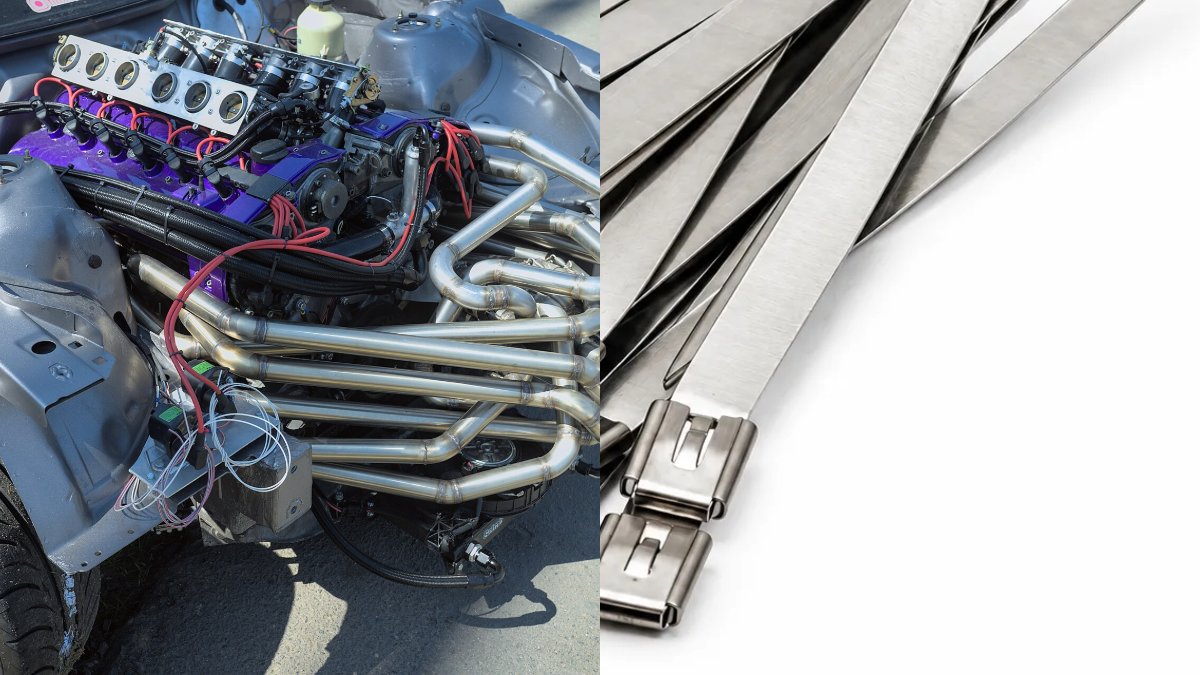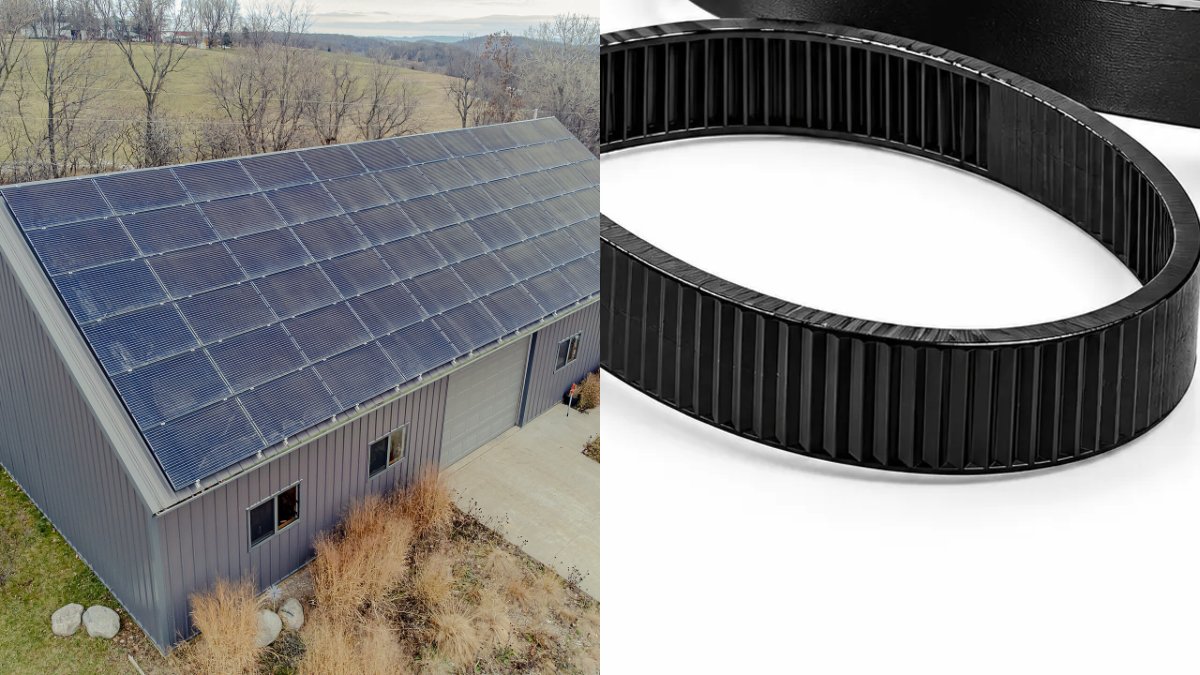


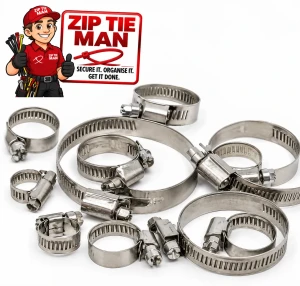
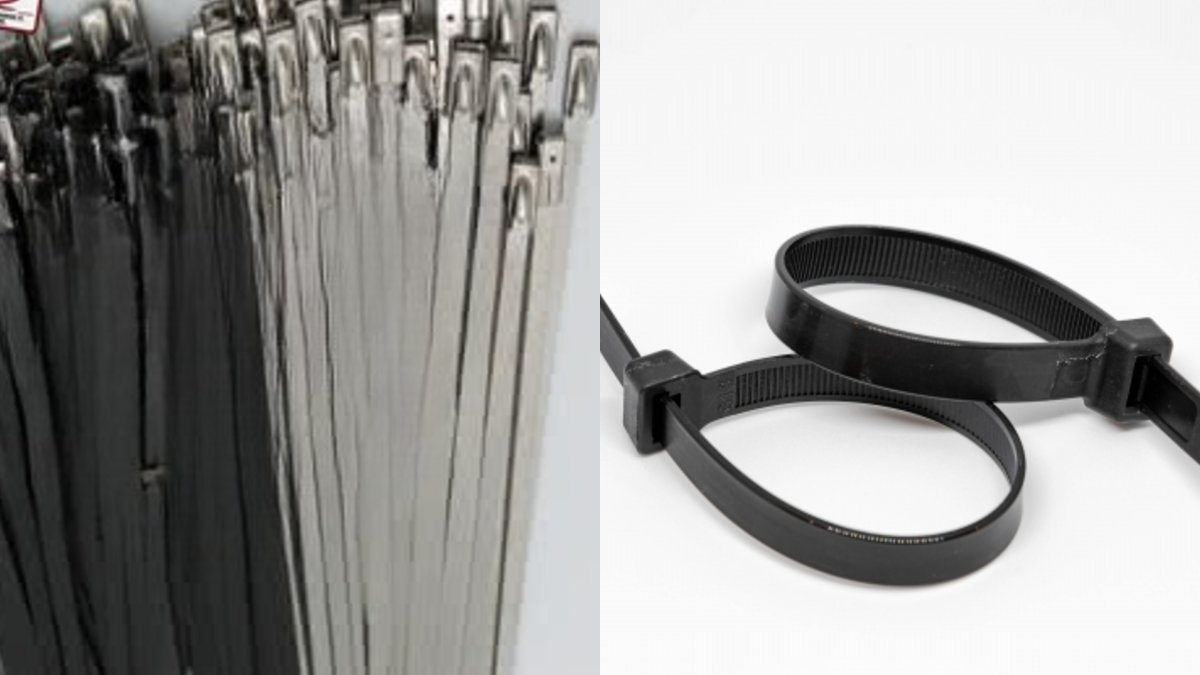
Metal vs plastic zip ties comes down to where the tie will live. Are metal zip ties better than plastic? Not always. Plastic zip ties, made from nylon 66, are the right choice for most jobs: they are cheap, easy to fit and cut, and black nylon is UV stabilised for outdoor work. Metal zip ties, made from stainless steel, win when the tie faces heat, salt air, chemicals or decades outdoors, where nylon would soften, go brittle or burn.
This comparison sets the two side by side, then helps you choose between the three kinds of stainless tie.
Metal vs plastic zip ties at a glance
| Plastic (nylon 66) | Metal (stainless steel) | |
|---|---|---|
| Heat | Softens near exhausts and engines | Rated to approximately 538°C |
| Fire rating | White ties carry UL94 V2 | Non-combustible; used where a non-combustible fixing is specified |
| Sun | Black UV stabilised | Handles years of direct sun |
| Salt and chemicals | Not the choice where chemicals or salt spray are constant | 304 for most chemicals; 316 for salt and marine |
| Widths we stock | 2.5mm to 12.7mm | 4.6mm and 7.8mm |
| Lengths we stock | 100mm to 1220mm | 200mm to 500mm |
| Colours | Black, white and 11 colours | Bare steel, or nylon coated |
| Fitting | By hand, or with a nylon gun | Best with a stainless tie gun |
| Releasable option | Yes (7.6mm, 55kg) | No |
| Cost | Low | Higher |
When plastic zip ties are enough
Choose nylon zip ties for wiring, data and household jobs, fencing and garden work, signs and banners, and most outdoor work away from the coast. Use black ties where they will sit in the sun. If you need strength rather than heat resistance, go wider: nylon runs from 8kg at 2.5mm to 80kg at 9mm. See how strong zip ties are for the full table.
When to step up to metal zip ties
- Near heat: exhausts, engines, plant and anything hot enough to soften plastic.
- On the coast or a boat: salt spray and wet air, where 316 marine grade lasts.
- Around chemicals: mining, industrial and treatment sites.
- Where fire matters: anywhere a non-combustible fixing is specified.
- For very long life outdoors: solar frames, towers and structures you do not want to revisit.
304, 316 or coated stainless?
| Grade | Best for | Sizes |
|---|---|---|
| 304 stainless | General outdoor and industrial work, heat, sun and most chemicals | 4.6mm x 200 to 500mm; 7.8mm x 250 to 500mm |
| 316 marine grade | Coastal, marine and offshore jobs where salt is the main risk | 4.6mm x 200 to 500mm; 7.8mm x 250 to 500mm |
| Nylon coated 304 | Where bare metal could scratch a surface or rub through insulation | 4.6mm x 200, 250 and 300mm |
Inland and away from salt, 304 does the job for less. Choose 316 near the sea. Choose coated ties for solar wiring on metal frames, painted or polished surfaces, and anywhere a bare tie could chafe a lead under vibration.
What the difference costs
Stainless costs several times more per tie, so it pays to use it only where nylon would fail. Our prices for a pack of 100, at October 2026:
| Tie | Pack of 100 |
|---|---|
| 4.8 x 200mm black nylon | $8.00 |
| 4.6 x 200mm 304 stainless | $39.00 |
| 4.6 x 200mm 316 stainless | $42.00 |
| 4.6 x 200mm nylon coated 304 | $45.00 |
On a mixed job, a common approach is nylon for most of the run and stainless only for the few ties near heat or in the spray zone. Bulk discounts apply to both: 10% off 5 to 9 packets and 20% off 10 or more.
Fitting metal zip ties
Stainless ties lock with a small ball inside the head rather than plastic teeth. They are hard to pull evenly tight by hand, and a hand-cut tail is sharp. A stainless steel zip tie gun tensions and cuts them flush in one action. Our guide on how to use a zip tie gun covers both nylon and stainless. For fitting and removing them by hand, see how to fit and remove stainless steel zip ties.
Common questions
Are metal zip ties stronger than plastic?
Metal ties handle heat, UV and corrosion far better than nylon. For a straight strength comparison, check the rating for the specific size, as we do not publish breaking strains for our stainless ties.
Do metal zip ties rust?
Stainless steel resists rust. 304 suits most outdoor work; 316 resists salt air and sea spray better, so it is the grade for boats, jetties and coastal sites.
Can metal zip ties damage cables?
A bare stainless edge can wear through insulation if it rubs under vibration. Use nylon coated stainless ties, or nylon ties, on wiring that moves.
Are plastic zip ties OK outdoors?
Yes. Black UV stabilised ties are made for outdoor use. Use stainless for heat, salt or the very longest life.
Written by the team at Zip Tie Man, an Australian zip tie supplier since 2016. Ratings and sizes are taken from our own product listings.
Shop metal zip ties or nylon zip ties, or read what a zip tie is and how it works.