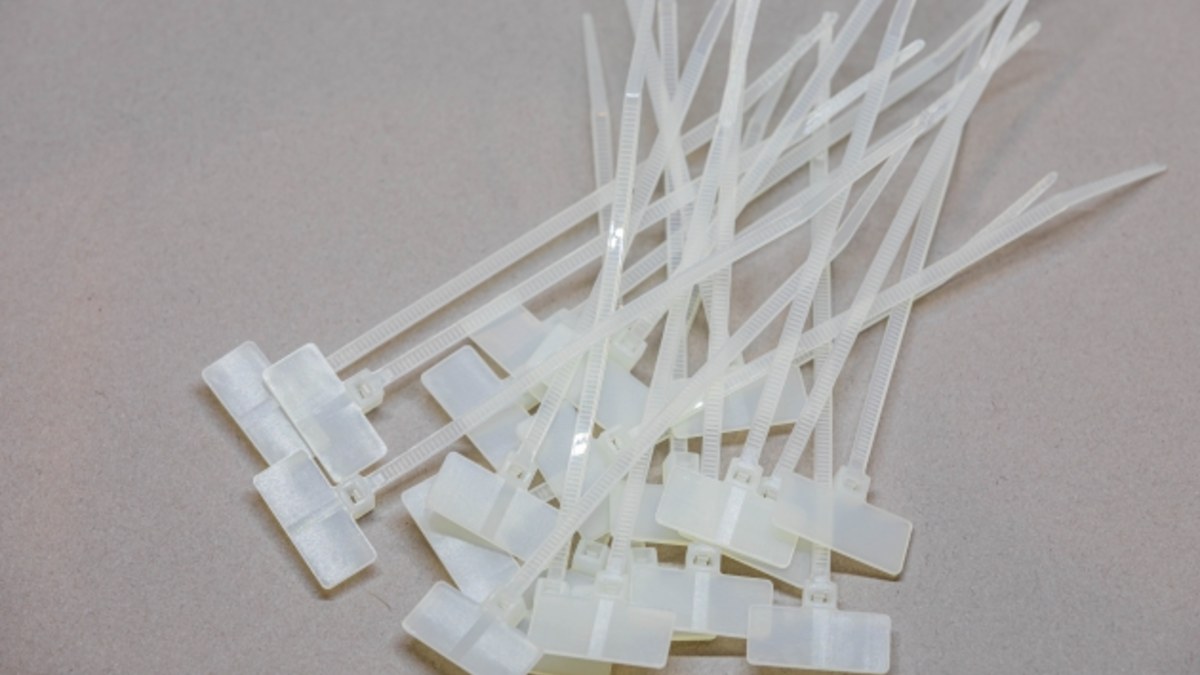



What are zip ties made of? Most are moulded from nylon 66, a tough engineering plastic also called polyamide 66. Metal zip ties are made from stainless steel, usually grade 304 or 316. Every nylon tie we sell is nylon 66, and every metal tie is 304, 316 or nylon coated 304 stainless.
The material decides where a tie will last. This guide explains each one, what the ratings on our ties mean, and the jobs where each material reaches its limit.
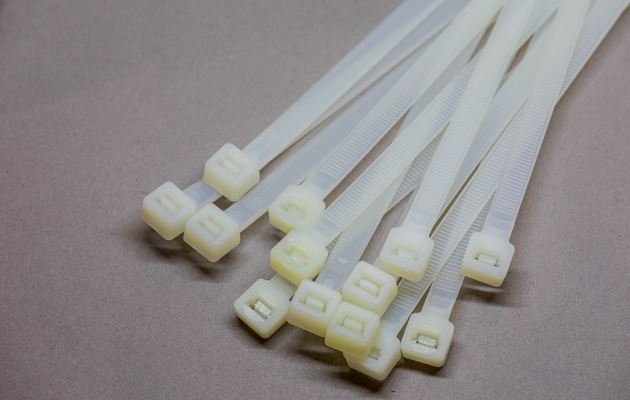
Nylon 66: the standard zip tie material
Nylon 66 is used for zip ties because it is strong for its weight, slightly flexible, and holds its shape. That flexibility lets the strap bend into a loop without cracking and lets the pawl in the head spring back over each tooth.
Our nylon 66 ties come in three finishes:
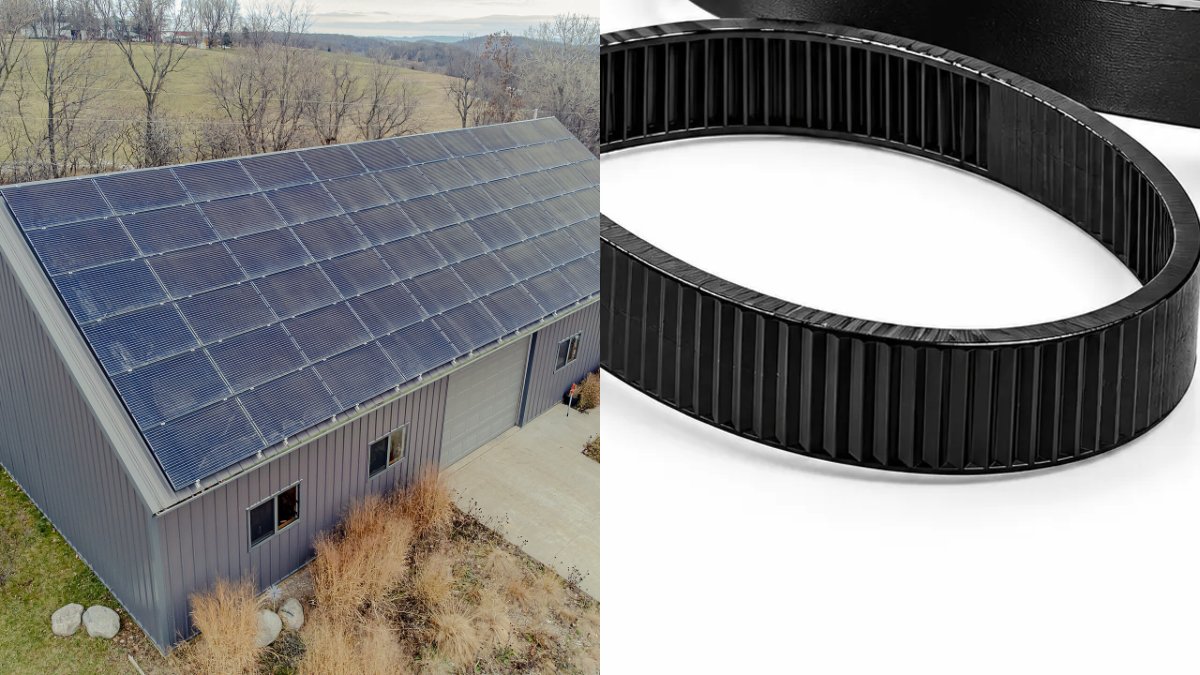
- Black: UV stabilised, which is why black is the usual choice for outdoor work.
- White: for switchboards, racks and light-coloured cabling.
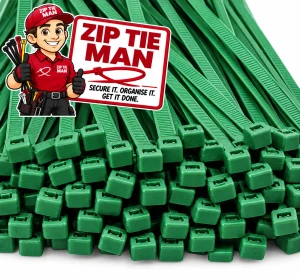
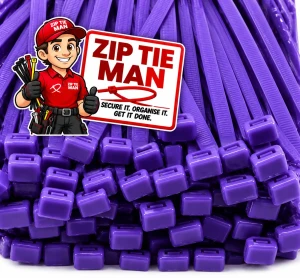
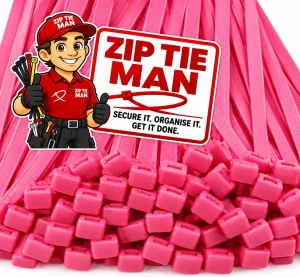
- Colours: 11 colours, for coding circuits, zones or jobs.
All three carry a UL94 V2 flammability rating, and all are the same strength width for width: 8kg at 2.5mm up to 80kg at 9mm. See how strong zip ties are for the full table.
What UL94 V2 means
UL94 is a common flammability test for plastics. A V2 rating means a test strip held in a flame stops burning on its own within a set time once the flame is removed, though it may drip burning particles. It is a useful baseline for electrical and enclosure work. It does not make a nylon tie heat proof: nylon still softens near exhausts and engines. See zip tie temperature ratings.
Stainless steel: for heat, salt and chemicals
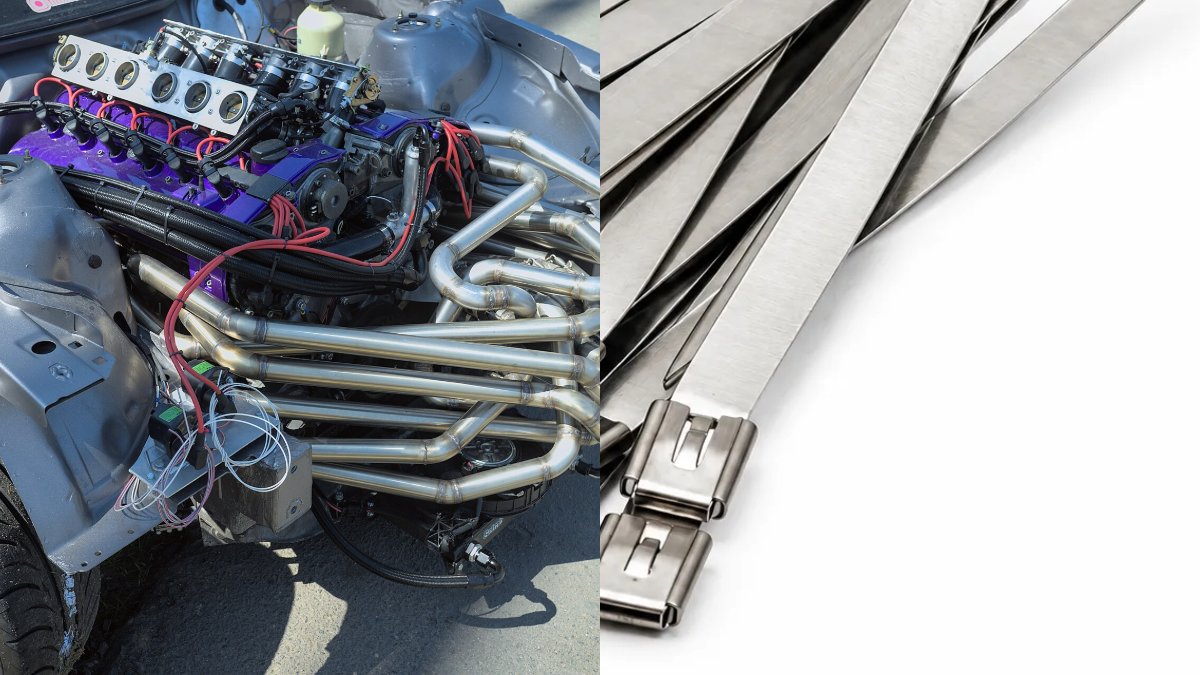
Metal zip ties are a stainless steel strap with a small ball inside the head that wedges the strap in place. Our stainless ties are listed with a temperature rating of approximately 538°C and are used where a non-combustible fixing is specified.
| Grade | What it is good at |
|---|---|
| 304 stainless | The everyday grade: heat near exhausts and engines, years of sun and most chemicals |
| 316 stainless | Marine grade: resists salt air and sea spray better than 304 |
| Nylon coated 304 | 304 strength with a nylon jacket, so bare metal cannot scratch surfaces or rub through insulation |
For a side-by-side comparison, read metal vs plastic zip ties.
How each material handles the conditions
| Condition | Nylon 66 | Stainless steel |
|---|---|---|
| Full sun for years | Black is UV stabilised | Handles years of direct sun |
| Heat | Softens near exhausts and hot engine parts | Rated to approximately 538°C |
| Salt air and spray | Not the choice where salt spray is constant | 316 is the marine grade |
| Chemicals | Not the choice where chemicals are constant | 304 handles most chemicals |
| Fire | UL94 V2 rated, but it will burn in a fire | Non-combustible |
Are zip ties recyclable?
Nylon falls under plastic resin code 7 ("other"). Most kerbside collections do not take small plastic items like zip tie offcuts, so check with your local council. The best way to cut waste is to use the right length so there is less to trim, and to use releasable zip ties on jobs you will reopen. Stainless offcuts can go in scrap metal recycling.
Common questions
What are zip ties made of?
Nylon 66 for standard plastic ties, and 304 or 316 stainless steel for metal ties. Some stainless ties have a nylon coating over the steel.
Is nylon 66 the same as plastic?
Nylon 66 is one type of plastic, chosen for zip ties because it is tough and slightly flexible, so the strap bends into a loop without cracking.
Are zip ties fuel resistant?
Nylon is widely used in engine bays, but we do not publish a fuel or oil resistance rating for our ties. For constant fuel contact or high heat, use stainless steel.
Are zip ties safe for aquariums or food?
We do not sell zip ties rated for aquarium or food-contact use, so we cannot recommend them for that.
Are black zip ties stronger than white?
No. Black, white and coloured ties of the same width have the same breaking strain. The difference is the finish: black is UV stabilised for long outdoor jobs.
Written by the team at Zip Tie Man, an Australian zip tie supplier since 2016. Ratings are taken from our own product listings.
Shop nylon zip ties or stainless steel zip ties, or start with what a zip tie is.
Featured image: Tomasz Sienicki, CC BY 3.0, via Wikimedia Commons (cropped).